How Does a Massage Gun Actually Work on Sore Muscles?
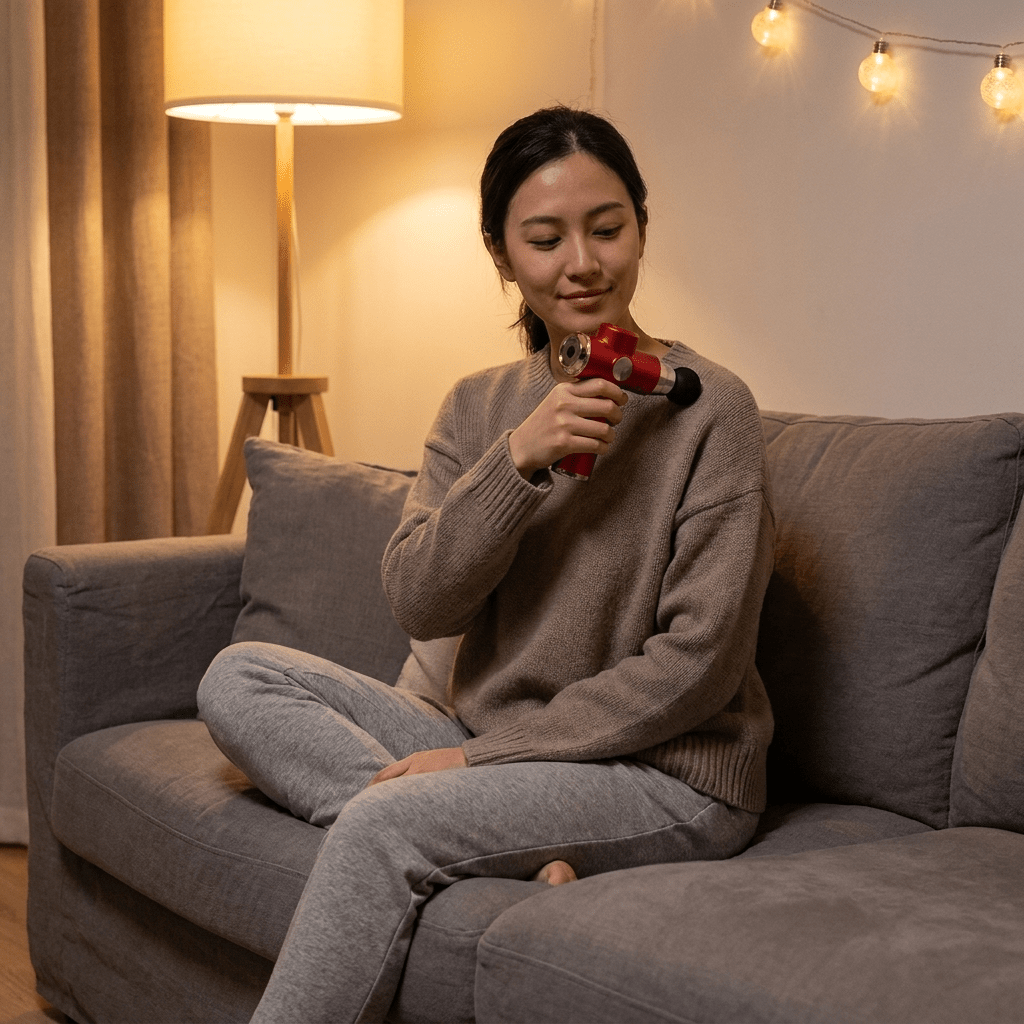
Massage guns turned up everywhere in the last few years — gym bags, football sidelines, Sunday-evening sofas. The pitch is always the same: point it at whatever's tight, feel it work. So how does a massage gun work, mechanically, and does the research actually back up what the marketing promises?
How Does a Massage Gun Actually Work?
A massage gun (the technical term is a percussive or percussion massage device) fires a small head in and out against the skin and muscle tissue at a rapid, repeated rate, typically dozens of times a second. That's the whole mechanism: rapid, localised percussion rather than the sustained pressure of a hands-on massage.
Two things are thought to happen as a result. The percussion increases local blood flow to the area, which may help clear the metabolic by-products — including lactate — that build up in a muscle after hard use. And the rapid input to the nerves in that area is thought to interfere with how pain signals get through, sometimes called gate-control theory: a lot of harmless sensory input arriving at once can dull the sharper signal of soreness or tightness. Neither effect is unique to massage guns specifically — they're the same general mechanisms behind massage and manual therapy more broadly, just delivered by a motor instead of a hand.
What the Research Actually Shows
This is one of the few corners of the wellness-device world with a reasonable amount of real research behind it, so it's worth being specific rather than vague.
A 2025 randomised controlled trial published in Frontiers in Public Health looked at percussion massage therapy for delayed-onset muscle soreness (DOMS) in physically active young men, and found a meaningful reduction in soreness in the treated group compared to controls, with the biggest gap showing up around 48 hours after exercise — which is usually when DOMS peaks (Ramírez-delaCruz et al., Frontiers in Public Health, 2025, read the study).
A systematic literature review in the International Journal of Sports Physical Therapy pooled results across a wide body of published trials on percussive therapy and found a consistent pattern: percussion massage tends to improve short-term flexibility and range of motion, and reduces people's reported musculoskeletal pain after repeated use. The same review is clear about the other half of the picture — it found little evidence that percussion massage improves muscle strength, explosive force, or activation. In other words, it can help a muscle feel less sore and move a bit more freely; it doesn't make that muscle stronger or more powerful (read the review).
A more recent randomised trial in Physiotherapy Research International (2026) tested percussive massage on the quadriceps after a fatigue protocol and found it helped with late-onset muscle pain specifically, without meaningfully changing muscle cross-sectional area or strength output (read the study).
Put together, the honest summary is: percussion massage has real, replicated evidence behind it for reducing perceived soreness and improving short-term flexibility. It doesn't have good evidence behind it as a strength, performance, or fitness tool. If a product or article claims a massage gun will make you stronger or faster, that's the part the research doesn't support.
What It Won't Do
A massage gun isn't a substitute for a proper warm-up, for rehab under professional guidance if you're carrying an injury, or for addressing why a muscle is chronically tight in the first place — posture, training load, and recovery habits do more of that heavy lifting over time. It's a tool for taking the edge off soreness and tightness in the moment, not a treatment for an underlying problem, and the research above doesn't claim otherwise.
How to Use One Properly
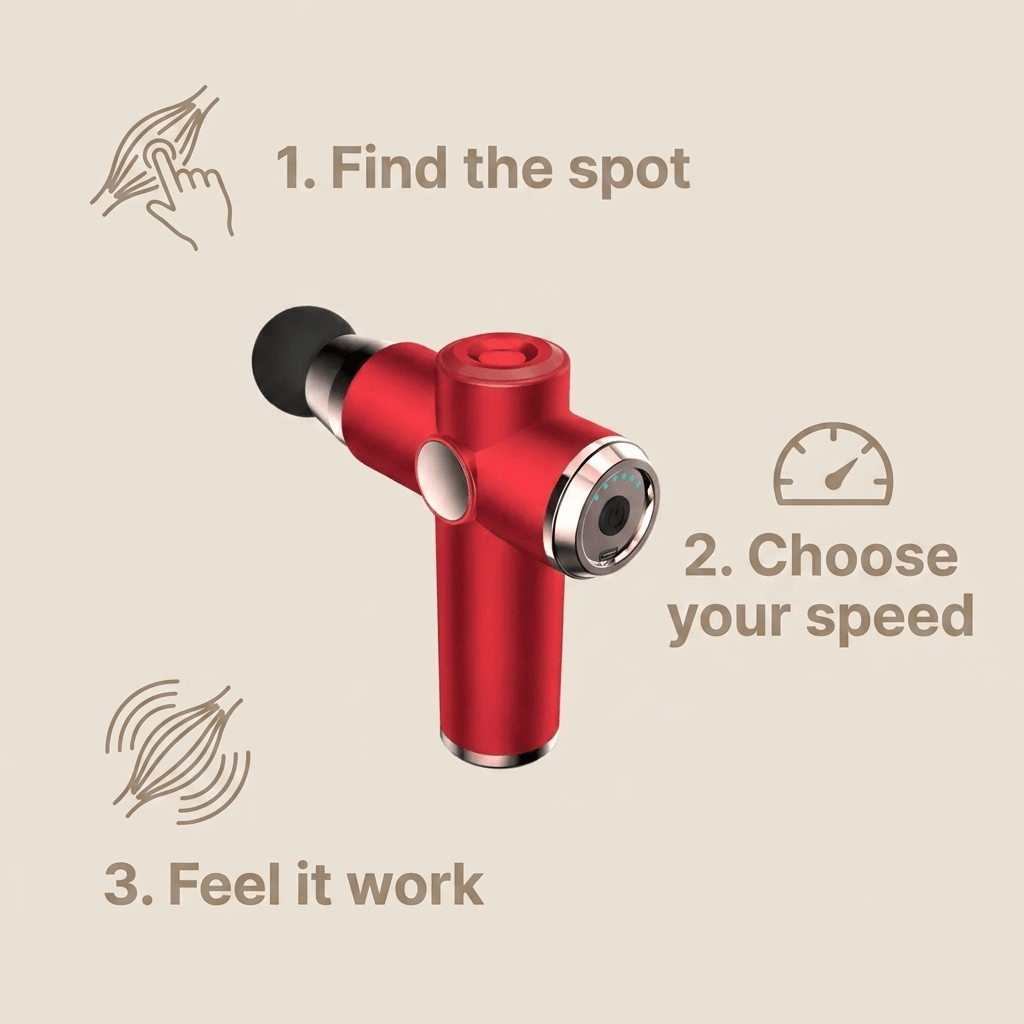
The pattern that shows up across the research and most manufacturer guidance is the same: short, targeted sessions rather than long ones. A few minutes on a specific muscle group — shoulders, calves, lower back — tends to be enough. There's no benefit shown from going longer than that in one sitting, and pressing too hard or lingering directly on a joint or bone is worth avoiding. Move the head slowly across the muscle rather than holding it rigidly in one spot, and stop if something feels sharp rather than simply tight.
The Honest Verdict
Percussion massage guns are a genuinely evidence-backed way to take the edge off sore, tight muscles after exercise or a long day, particularly in that 24–48 hour window when DOMS tends to peak. They're not a performance enhancer, and they're not a substitute for proper recovery habits. Used for what the evidence actually supports — short-term relief and flexibility, not strength or fitness gains — they do what they say on the tin.
Nourva's own percussion massage gun is built around the same idea: point it at whatever's tight, a few minutes at a time, and get back to your day.