How to Use a Posture Corrector (Without Undoing the Point)

A posture corrector doesn't fix slouching. It notices it — and the difference between those two things is most of what's worth knowing before you buy one. If you've ever wondered how to use a posture corrector properly, or whether the vibration-and-nudge kind actually change anything, here's the honest version.
How Does a Posture Corrector Actually Work?
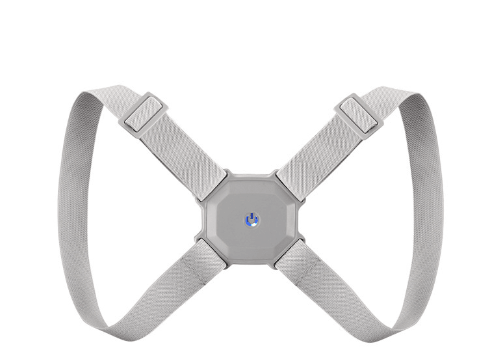
The type Nourva sells, and most of the wearable ones on the market now, aren't rigid braces that physically hold your shoulders back. They're small sensors worn across the upper back that detect when you slump forward and give you a gentle vibration to flag it. You feel the nudge, you sit up, the vibration stops. That's the entire mechanism — it's a reminder system, not a support structure.
That distinction matters because it changes what the device can realistically do. It can't strengthen anything on its own, and it can't hold your spine in place while you sit there doing nothing. What it can do is interrupt the automatic, unnoticed slide into a slouch that happens hours into a desk day, often well before you'd notice it yourself.
What the Research Actually Shows
There's a reasonable, growing body of research on wearable posture feedback specifically in desk and typing contexts. A study published in the International Journal of Environmental Research and Public Health tested sitting posture during prolonged computer typing with and without a wearable biofeedback sensor, and found that real-time feedback measurably changed sitting posture compared to sitting without it (read the study). A separate study looking at vibrotactile feedback on posture and muscle recruitment found that haptic cues meaningfully reduced how far people drifted from an upright position during a task (read the study).
What none of the research shows is a device that fixes posture once it's removed. The effect is present while you're wearing it and paying attention to the nudges; nothing published so far demonstrates that the improvement holds once the corrector comes off for good. That's consistent with what physiotherapists and consumer health outlets have been saying for a while: a posture corrector works as a cue, not a cure — the lasting change comes from the muscles you build and the habits you adjust around it, not from the device itself (see coverage from NBC News).
A Note on How Long to Wear It
Nourva's own product page suggests wearing it for "however long feels manageable — even a couple of hours a day." That's a reasonable starting point, but it's worth knowing that some physiotherapists recommend keeping sessions shorter at first — closer to 20–30 minutes — before building up. The logic: if the device is doing the reminding for eight hours a day, the muscles that are supposed to be doing the actual holding can end up getting lazier, not stronger. Starting short, noticing what "upright" feels like without help, and building up gradually gets more out of it than wearing it all day from week one.
What It Won't Do
It won't correct a structural issue, won't substitute for seeing a physio about ongoing back or neck pain, and won't do anything for the muscles that actually need to get stronger to hold good posture on their own — that part still comes down to exercise and how your desk is set up, not the device on your back.
The Honest Verdict
A posture corrector is a genuinely useful nudge for the specific problem of not noticing you've slumped — the research backs that part up. It's not a fix for posture on its own, and Nourva's copy undersells that slightly by not flagging the shorter-session guidance some physios recommend. Used as a short, building-up habit rather than an all-day crutch, it does what a reminder is supposed to do: catch you in the moment, often enough that catching yourself eventually gets easier without it.
If you want to see how ours works, the Smart Posture Corrector page has the specifics.